Find what matters.
All editorial stories
Swedish government offices to block two AI tools while retaining Copilot
Sweden’s Government Offices will block staff access to ChatGPT and Claude on work computers from Monday, while directing civil servants to Microsoft Copilot, Decrypt reports.
Source: Decrypt
Google policy allows connected app data to inform AI-linked ads, Decrypt reports
Decrypt reports that a Google privacy-policy change permits connected Gmail, Drive and Photos data to personalize advertising through its Personal Intelligence AI features.
Source: Decrypt
Pennsylvania enacts disclosure rule for AI-created advertising
The Verge reports that Pennsylvania Governor Josh Shapiro signed a law requiring labels for advertisements created or substantially altered using AI.
Source: The Verge
Blue Planet III uses imperfect footage to signal authenticity
The Verge reports that the BBC nature series is retaining imperfect shots to distinguish its footage in an era of polished AI imagery.
Source: The Verge
r/opensource moderators bar AI-related project submissions
The Verge reports that r/opensource has introduced submission rules excluding projects that use AI, were created with AI or are intended for AI.
Source: The Verge

Robots are leaving the lab. Is the world ready for a new era of AI?
Why the next big step in artificial intelligence will happen in the physical world, not on a screen.

Fewer parameters, more meaning: the new language model race
Compact models are reshaping what effective AI can look like.

Next-generation computing: how chip architecture is changing
Exploring the technologies shaping the future of artificial intelligence.

AI agents join the team: from experiments to everyday workflows
How companies are learning to trust digital assistants with complex tasks.

AI infrastructure: why data centers are becoming the new oil
Energy, computing power and the new rules of technology competition.

Teaching a model to question its own answers
Researchers are looking for ways to make neural networks more accurate and reliable.
Open models: freedom to build or a new dependency?
What is driving the shift toward open weights and shared tools?

People first: product design in the age of AI
Why a good AI product does not begin with choosing a model.
Multimodal AI without the magic: how it sees, hears and understands
A closer look at systems that work with several types of data at once.
Small models, big possibilities: AI on your device
Local computing is putting users back in control of their data.
Beyond the prompt: how AI reasoning works
From a single answer to a sequence of verifiable steps.

AI and video: where experimentation ends and filmmaking begins
New tools are changing the way creative teams work.
From pilot to profit: measuring the impact of AI
The metrics that reveal the real value of the technology.
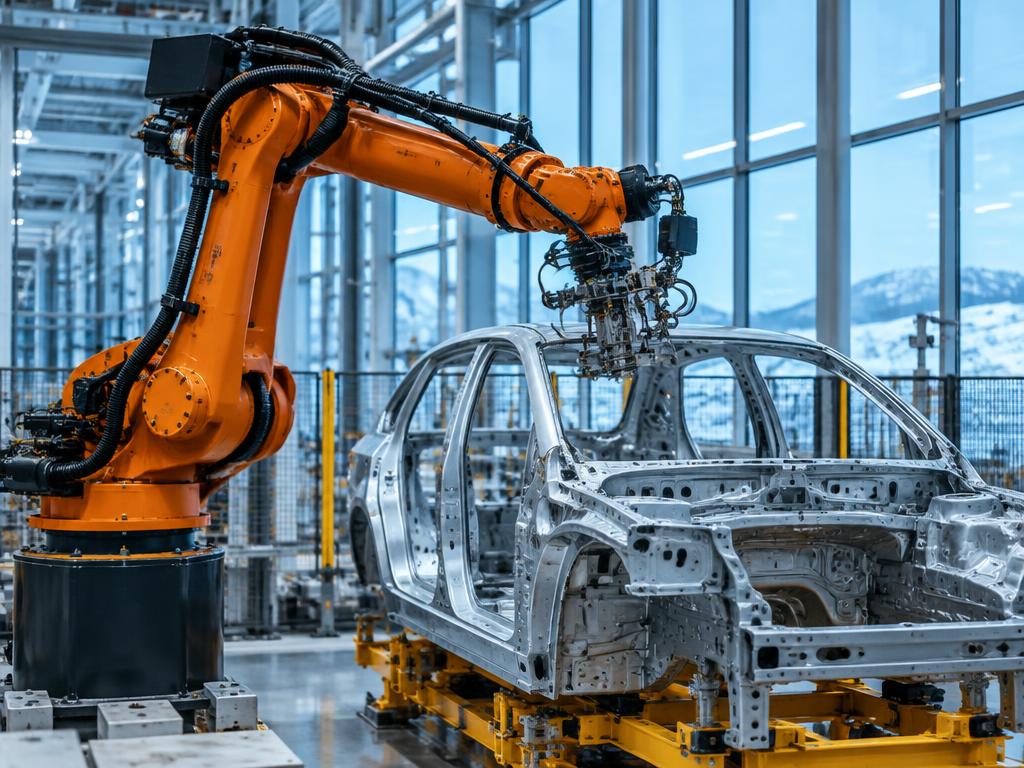
The smart factory: computer vision on the production line
How algorithms spot defects and support specialists.
Company knowledge: why businesses need their own search engine
A practical look at search and answer generation using internal documents.
“Technology should expand human potential”
A conversation about trust, responsibility and working alongside algorithms.
Why asking questions is the most important skill in the AI era
Automation does not replace critical thinking.
Education after ChatGPT: what should the next generation learn?
Rethinking learning in a world of readily available digital assistants.
Augment, not replace: a new agreement between people and machines
An expert perspective on work as it evolves alongside technology.
Inside the lab: building the next generation of robots
A video feature following the journey from research idea to prototype.
The big conversation: can AI really reason?
Questions about thinking, testing hypotheses and the limits of models.
Inside a data center: where artificial intelligence lives
An overview of computing infrastructure and its role in advancing AI.
AI in manufacturing: from idea to working solution
Industrial automation through the eyes of engineers.
Neuromorphic computing: chips inspired by the brain
New architectures promise a different approach to energy efficiency.
AI accelerates drug discovery — but does not replace the lab
How computational methods help identify promising molecules.
Synthetic data: can AI learn from AI?
The possibilities and limitations of training on generated examples.
The research assistant: from literature review to a new hypothesis
Researchers are rethinking how they work with large bodies of knowledge.
Powering algorithms: the real cost of computing
Sustainability is becoming part of engineering decisions.
Edge AI: why computing is moving closer to people
Devices are becoming more independent, with lower latency.
Robotics and vision: how machines learn to navigate
Sensors and models offer a new view of the physical world.
Model security: protection starts before the first request
How safeguards, constraints and risk testing work.
Who owns an AI answer? Making sense of copyright
Complex questions that a user agreement alone cannot resolve.
Algorithmic transparency: the right to know how decisions are made
Why explainability matters to people and organizations.
Trust by default? How to verify AI-generated content
Responsible use starts with verification.
Privacy and personalization: where is the line?
Balancing the convenience of digital services with information protection.
On the AI forum agenda: from big promises to real-world cases
The topics shaping professional discussions.
Developers and researchers: lessons from open hackathons
Community as a space for new experiments.
The industry meets: big questions at technology conferences
Computing, trust and new ways to collaborate.
An AI workshop: starting your own research project
A toolkit for a thoughtful first experiment.
What to read about AI: books, research and open courses
An editorial reading list for those who want to go deeper.